Catalonia's Political Crossroads: A House Divided
How Junts, ERC, and Madrid are gambling with both Catalonia's and Spain's future
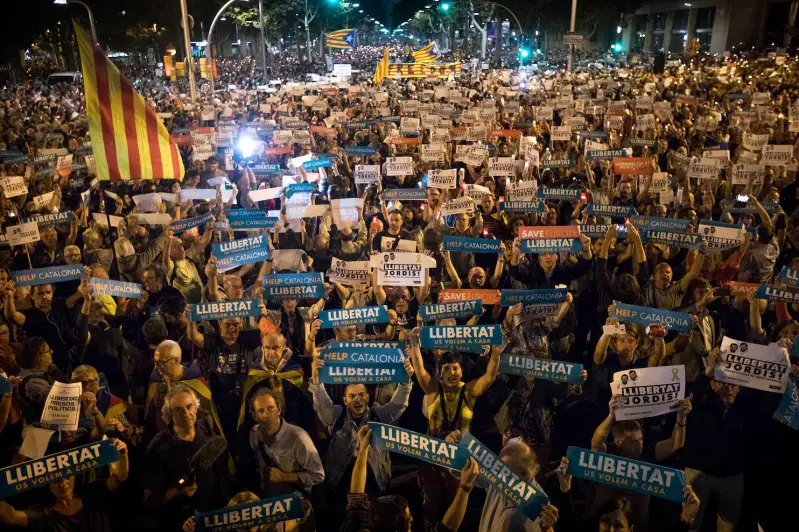
The political theatre in Catalonia has become a high-stakes poker game—and ordinary citizens are left holding the bill. As Pedro Sánchez clings to power in Madrid through increasingly fragile deals with Catalan separatist parties, the question isn't if his government will collapse, but when.
The Players: Junts and ERC
Two parties dominate Catalonia's independence movement, but they couldn't be more different in approach. Junts per Catalunya (Together for Catalonia), led by the exiled Carles Puigdemont, represents the hardline wing. Puigdemont, still wanted by Spanish authorities for his role in the 2017 " illegal" referendum, operates from Belgium like a political phantom—present in spirit,
absent in body.
His party has mastered the art of brinkmanship, extracting maximum concessions from Madrid while delivering minimum compromise.
Then there's Esquerra Republicana de Catalunya (ERC), the Republican Left, currently led by Oriol Junqueras after his release from prison. ERC presents itself as the "pragmatic" face of independence—willing to negotiate, willing to wait. But this patience has cost them dearly.
In recent Catalan elections, ERC has hemorrhaged support to Junts, with voters asking a brutal question: "If you're not fighting for independence, what are you fighting for?" The answer, it seems, is political survival. ERC's credibility evaporated when they repeatedly
propped up Sánchez's government in exchange for promises that never quite materialized.
Working-class Catalans who once believed in ERC's vision now see a party more interested in ministerial cars than in la República.
“Sánchez hasn't built a government; he's built a house of cards in a windstorm.”
The Amnesty Gamble
Sánchez's controversial amnesty law—designed to pardon separatist leaders involved in the 2017 independence bid—was supposed to be his masterstroke. Instead, it's become his albatross. The law has infuriated constitutional Spain, emboldened the separatists to demand more, and hasn't even guaranteed parliamentary stability.
Puigdemont returned to Catalonia in August 2024 for a brief, theatrical appearance before vanishing again—demonstrating both the amnesty's limitations and his own flair for political drama. The message was clear: "I take what I want from Madrid, but I give nothing in return."
Sánchez's Tightrope
Pedro Sánchez governs Spain with a minority government that depends on Junts and ERC voting with him—or at least abstaining—on crucial legislation. This isn't coalition government; it's political hostage-taking. Every budget, every reform, every vote becomes a negotiation where Catalan separatists extract their pound of flesh.
The Socialist leader has become increasingly isolated. His traditional base feels betrayed by concessions to separatists. The opposition smells blood. His own party members whisper about leadership challenges. As one Spanish political analyst put it, "Sánchez hasn't built a government; he's built a house of cards in a windstorm."
The Economic Reality Check
While politicians play their games, working families face the consequences. Catalonia's political instability has deterred investment. Businesses that once called Barcelona home have relocated headquarters to Madrid or Valencia. The uncertainty costs jobs—real jobs for real people who don't care about flags and anthems but about feeding their families.
Spain's economy faces headwinds: inflation, rising debt, and an aging population. Yet instead of unified economic policy, we get endless political warfare. The European Union watches nervously, seeing in Catalonia a preview of separatist tensions brewing across the continent.
Where Are We Heading?
The trajectory is unsustainable. Junts gains popularity precisely because it refuses compromise—a luxury opposition parties enjoy. ERC loses support because governing requires difficult choices that anger true believers. And Sánchez? He survives month to month, crisis to crisis, buying time with concessions that weaken Spain's constitutional order.
The likely scenarios are all problematic. Either Sánchez's government collapses, triggering new elections and more instability. Or he lurches further left and deeper into dependence on separatists, fracturing Spain's social fabric. Or—most dangerously—he attempts a "grand bargain" on Catalan sovereignty that could tear the country apart. There are so many who , rightly or wrongly, oppose the breaking up of Spain.
A Message to Citizens
For the working people of Catalonia and Spain, the message should be clear: demand more from your politicians. Demand leaders who solve problems rather than exploit divisions.
Demand economic policies that create jobs, not constitutional crises that destroy them. As the Italian political philosopher Antonio Gramsci wrote, "The crisis consists precisely in the fact that the old is dying and the new cannot be born." Spain is caught in this crisis. The old model of centralized power is broken. But the separatist alternative offers only chaos.
What we need—Catalans, Spaniards, and Europeans alike—is leadership with vision beyond the next vote. Unfortunately, looking at Sánchez's desperate dealmaking, Puigdemont's theatrical exile, and ERC's fading relevance, that leadership remains painfully absent.
The house is divided. And divided houses, as history teaches us, cannot stand for long.